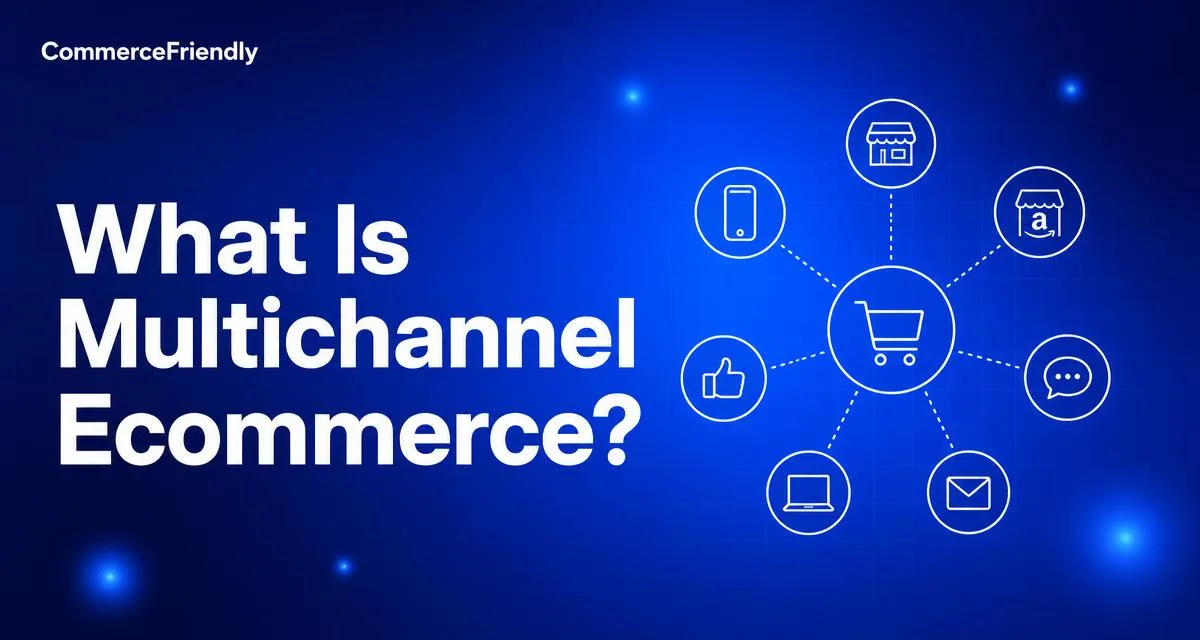
What is multichannel ecommerce?
Multichannel ecommerce means selling the same catalog through several sales channels at once: your own store, marketplaces, social storefronts and retail. The definition is simple; the operational requirements are what most guides skip.
The definition, and what it actually requires
A business is genuinely multichannel when a customer can buy the same product from more than one place and the business still has one accurate view of stock, orders and revenue. Listing on three marketplaces with three spreadsheets is not multichannel, it is three businesses.
- One catalog with consistent SKUs and attributes.
- One inventory pool with per-channel allocation.
- One order queue regardless of where the sale happened.
- One reporting view showing revenue and margin per channel.
Multichannel vs omnichannel vs single channel
| Model | Definition | Customer experience | Systems needed |
|---|---|---|---|
| Single channel | One place to buy | Simple and consistent | Store platform only |
| Multichannel | Several independent channels sharing catalog and stock | Consistent product, channel-specific journey | Catalog, inventory sync, order hub |
| Omnichannel | Channels connected into one customer journey | Buy online, return in store, unified profile | Everything above plus unified customer and loyalty data |
Benefits and honest costs
- Benefit: reach buyers where they already search instead of paying to bring all of them to you.
- Benefit: revenue is less exposed to one algorithm, one ad platform or one policy change.
- Cost: marketplace fees typically take 8 to 15 percent of order value before advertising.
- Cost: every channel adds listing upkeep, support queues and returns policy differences.
- Cost: without inventory sync, oversells damage seller metrics and can suspend accounts.
The rule of thumb: add a channel when you can serve it with existing operations plus automation, not when you need a new team to keep it alive.
How do you know your business is ready for multichannel?
Readiness is less about revenue size and more about whether your current operations already run smoothly on one channel. A store that still struggles with stock accuracy, order dispatch times or return handling on a single channel will find those same problems multiplied, not solved, by adding more places to sell.
- You can answer, in real time, how many units of a given SKU are actually available to sell.
- Order dispatch consistently meets your stated turnaround time on your existing channel.
- You have a defined process, not just a person, for returns and refunds.
- You know your true margin per order after fees and shipping, not just gross revenue.
- Someone owns channel performance as an explicit responsibility, not an add-on to another role.
Key metrics to track once you go multichannel
| Metric | What it tells you | How often to review |
|---|---|---|
| Revenue by channel | Where demand is actually coming from | Weekly |
| Contribution margin by channel | Which channels are worth the operational cost | Monthly |
| Stock sync accuracy | Whether oversells are a live risk | Weekly during ramp-up, then monthly |
| Order-to-dispatch time by channel | Whether fulfilment is keeping pace with sales | Weekly |
| Return rate by channel | Whether channel-specific expectations are being met | Monthly |
Why CommerceFriendly
CommerceFriendly builds the multichannel foundation before you list anywhere: catalog structure, inventory rules, order routing, tax and reporting are configured together so every new channel plugs into a system that already works.
Catalog, stock and order flow configured before channels are switched on.
Product attributes mapped to each marketplace's required fields automatically.
Fees, shipping and tax modeled so you know which channels earn their place.
Adding a fourth channel uses the same configuration as the first.
Frequently asked questions
What is the difference between multichannel and omnichannel ecommerce?
Multichannel means selling through several independent channels that share the same catalog and stock, while omnichannel goes further by connecting those channels into one seamless customer journey, such as buying online and returning in store. Most businesses start multichannel and only move to omnichannel once they have unified customer and loyalty data across channels.
Is multichannel ecommerce worth it for a small business?
It can be, but only once your operations can handle the extra listing, stock and support workload without hiring immediately. A single well-run marketplace alongside your own store is often a better starting point than spreading across five channels at once.
How much does multichannel ecommerce cost to run?
Marketplace fees typically take 8 to 15 percent of order value, and inventory sync or order management software adds a monthly subscription on top of your store platform. The real cost most businesses underestimate is the operational time needed to keep listings and stock accurate across channels.
What systems do you need to run multichannel ecommerce properly?
At minimum you need one product catalog, one inventory pool with per-channel allocation, and one order queue that consolidates sales regardless of channel. Reporting that shows margin per channel, not just revenue, is what separates a profitable multichannel setup from one that just looks busy.
When should a business add a second sales channel?
Add a channel once your existing operations, or your automation, can absorb the extra listings, stock checks and support volume without a new hire. Adding a channel to chase revenue before the first channel is stable usually creates more problems than it solves.
Does multichannel ecommerce increase the risk of overselling?
Yes, if each channel keeps its own separate stock count, overselling becomes almost inevitable once order volume rises. A single available-to-sell number distributed across channels with a small safety buffer removes most of that risk.
Keep reading
Automate orders, inventory, tax and marketing workflows end to end.
The full launch sequence, from product data to first paid order.
How the major platforms compare on cost, speed and scale.
When to move off Shopify and which stacks are worth evaluating.